Art at the Heart of Ulu Art Bay
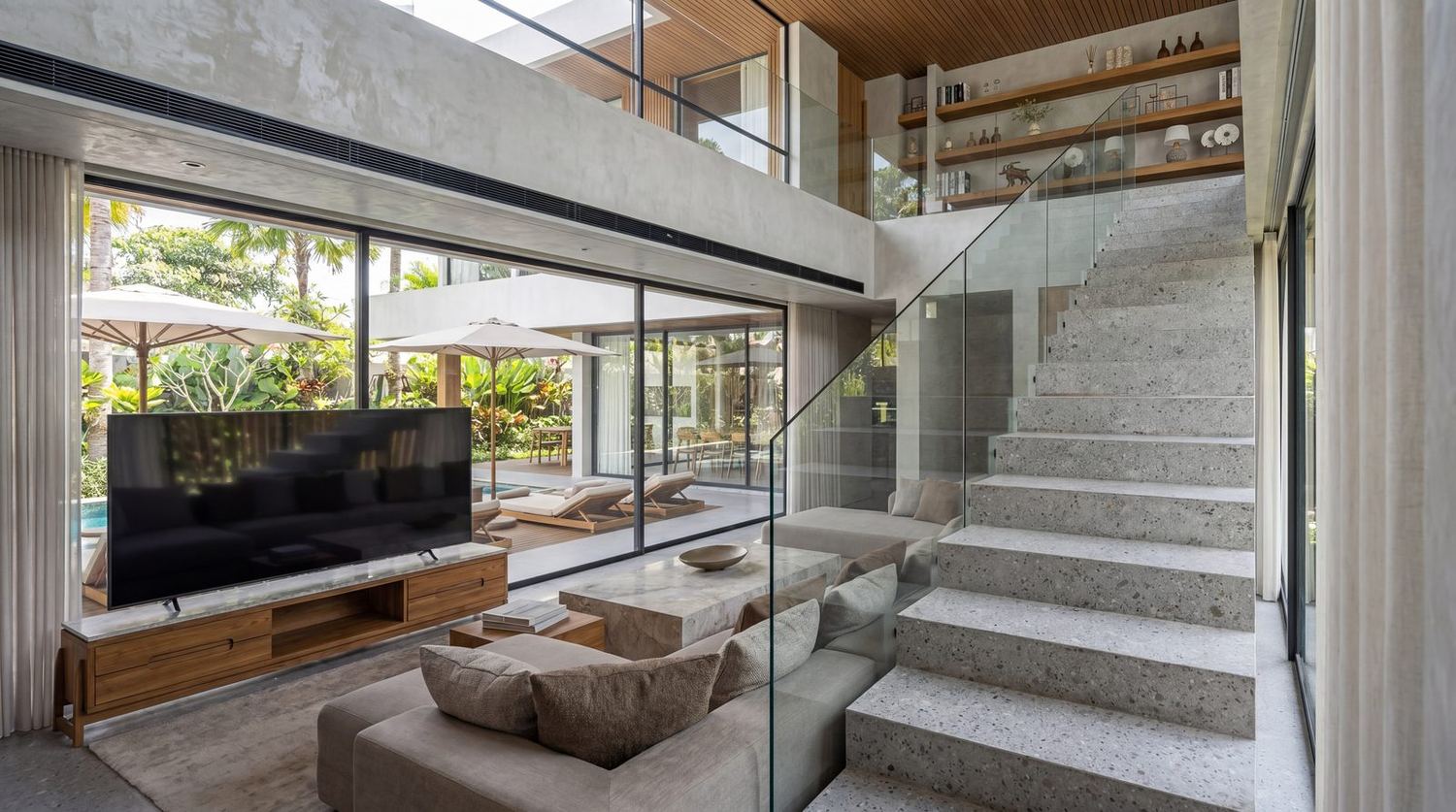
The name is not decoration. Ulu Art Bay is built around a simple intention, that art should not be confined to a gallery wall but should live in the spaces people actually use. The estate is designed so that the work, the architecture and the materials are decided together, and art becomes part of the fabric of the place rather than something added at the end.
This guide explains what that means in practice: the resident artist Mersuka Dopazo, the dedicated gallery at the centre of the estate, the idea of art as habitat rather than ornament, and the quieter commercial point underneath it all, that genuine design and a real cultural anchor are part of what the asset is worth and how it holds its value.
Art at the heart
Most villa estates treat art as the last thing in, a few canvases hung to dress a show home once everything else is built. Ulu Art Bay inverts that order. Art is part of the brief from the first sketch, which is why it sits in the name and at the centre of the estate rather than at its edges.
The estate is 21 freehold villas terraced down the Uluwatu cliffs, and at its heart, inside the private Recreation Club, is a dedicated art gallery. The work is not an afterthought hung in a lobby, it is a programmed part of daily life on the estate, woven in among the spa, the padel courts and the restaurant. You can see how it fits the wider plan in our complete guide to the estate.
This is what the project means by art-led. The art direction and the architecture are one decision, not two, so the villas and the shared spaces are designed to hold work rather than merely to have room for it. The whole estate is composed, down to the pieces on the wall.
The name is literal: where art becomes habitat
Ulu Art Bay takes its name from the intention to make a place where art becomes habitat. The work is not set behind a rope in a room you visit once. It lives in the spaces residents use every day, which changes how art is experienced from an occasion into an environment.
That matters because art, in most homes, is the first thing that looks like an afterthought. When a house is designed for it from the start, the art stops being decoration and becomes part of the place. A guest does not walk into a villa and then notice a painting. They walk into a composed room in which the work was always going to hang.
A resident artist and a dedicated gallery turn an estate from a set of houses into a place with a point of view.
Thinking about a villa at Ulu Art Bay? Our team can walk you through availability, pricing and the freehold ownership structure.
EnquireResident artist: Mersuka Dopazo
The clearest sign that the estate takes its name seriously is that it has a resident artist. Mersuka Dopazo, Spanish born and Bali based, is part of Ulu Art Bay rather than a one-off commission bought in to fill a wall. Her presence makes the art programme a living thing, with work created in and for the place.
A resident artist changes what an estate is. It means the art is specific to Ulu Art Bay rather than generic, that the gallery has a point of view, and that owners are buying into a cultural project and not just a cluster of houses. For a buyer who cares about design, that is the difference between a development and a place with an identity.
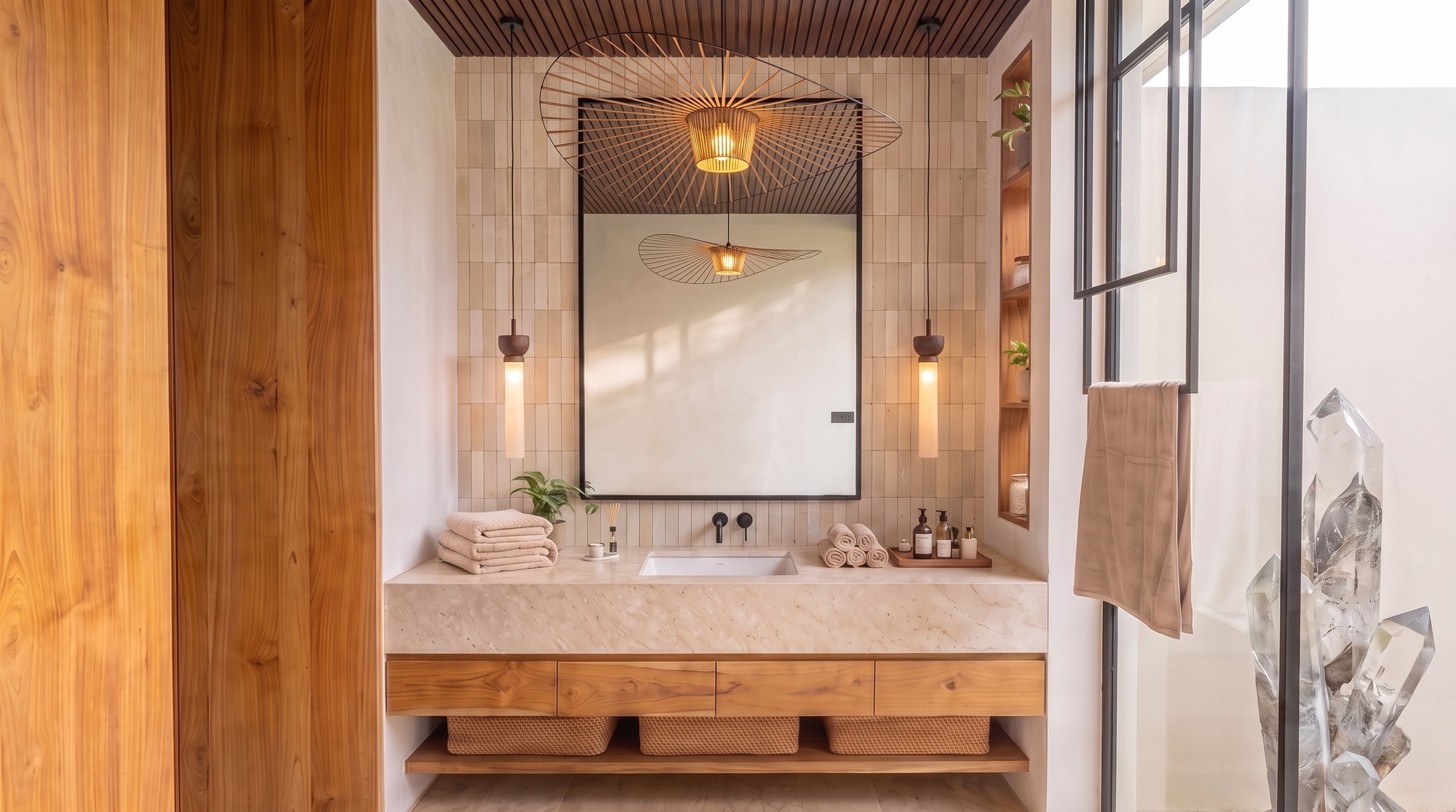
Dopazo's work gives the estate a visual signature that cannot be copied by the next project down the road. That identity is worth more than it first appears. In a market full of good-looking villas, a genuine cultural anchor is what makes a place memorable to guests and recognisable to buyers, and recognition is what sustains both rental demand and resale interest over time.
The estate gallery
At the heart of the estate sits a dedicated art gallery, part of the private Recreation Club that anchors Ulu Art Bay. It is not a lobby with a few pieces in it. It is a real exhibition space that runs curated shows and holds a living gallery of modern work, a programme that changes rather than a fixed hang.
A living gallery is a different proposition from a permanent display. Because the work moves and the exhibitions turn over, the gallery stays a reason to return rather than a thing seen once. It gives the estate a cultural pulse, a sense that something is always happening at its centre, which is rare in a residential development.
The gallery also gives the resident artist a home on the estate, a place where work made in and for Ulu Art Bay can be shown to the people who live with it. That loop, from studio to gallery to the villas themselves, is what makes the art programme feel native to the place rather than imported into it.
It raises the standard of everything around it, too. A real gallery sets a reference for how work is lit, hung and framed, and that discipline carries into the villas and the shared spaces. The estate holds itself to a gallery standard rather than a hotel-lobby one, which is a higher bar and a visible one the moment you walk the grounds.
The gallery within the Recreation Club
The gallery does not stand alone. It sits inside the Recreation Club, alongside a wellness spa with a traditional hammam, saunas, a jacuzzi and an ice bath, yoga and Pilates studios, professional floodlit padel courts, a Mediterranean fine-dining restaurant and a boutique cafe. Art is woven into a daily life of recovery, food and sport rather than set apart from it.
That placement is deliberate and it is the whole idea. A gallery inside a museum is visited. A gallery inside the room where you take your coffee, play padel and recover in the spa is lived with. The estate wants the second thing, art as part of the rhythm of a day, which is what habitat means here. You can walk the rest of that world in our guide to the Recreation Club.
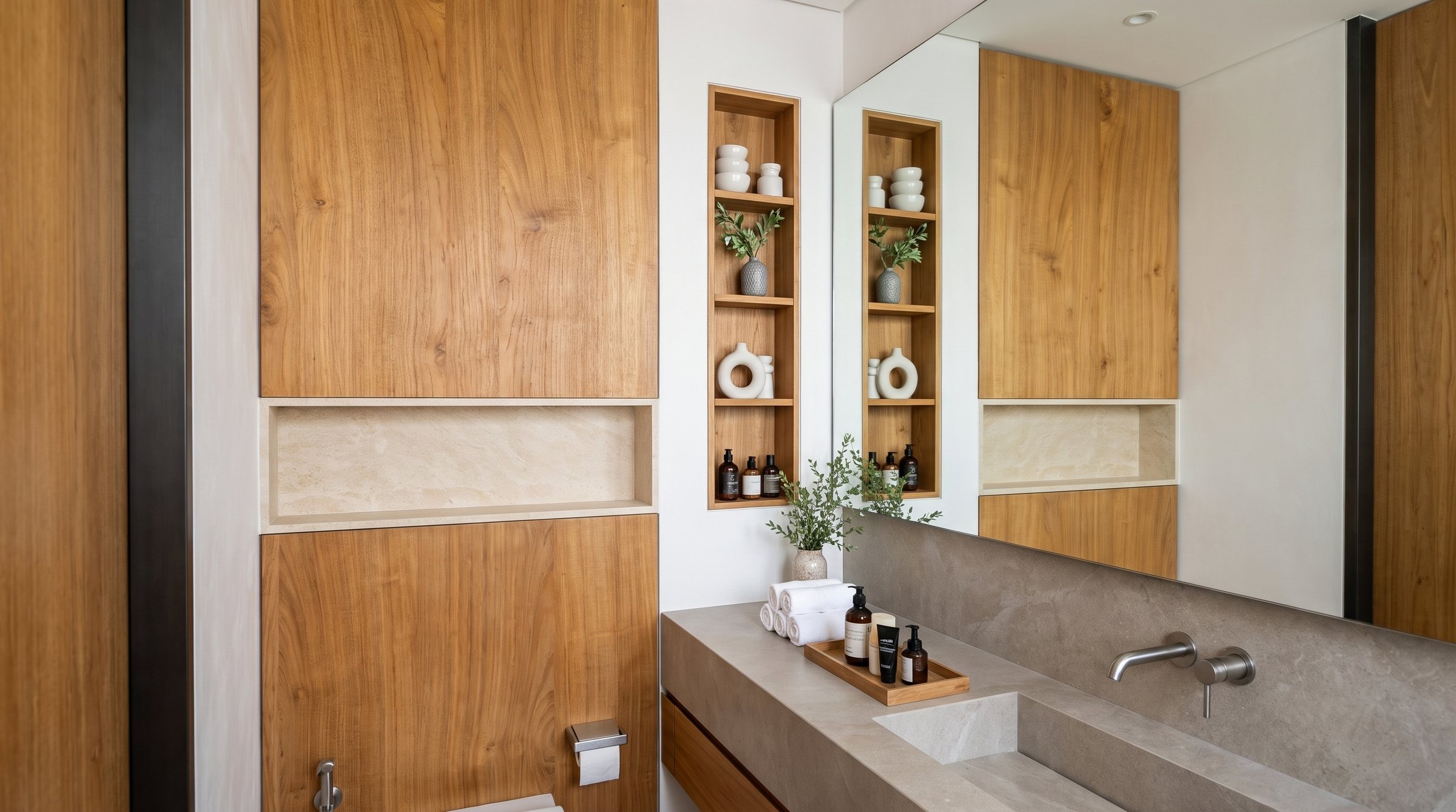
Where art becomes habitat in the villa
The art-led idea does not stop at the gallery door. It runs into the villas, which are designed to hold work rather than simply to be decorated. The three design languages a buyer chooses from, Minimal Modern, Mediterranean Luxe and Bohemian Artist, each set up a different relationship with art, from a pared wall that carries a single strong piece to a room built around colour and craft.
In concrete terms the architecture is shaped for the work. Wall runs are sized to hold pieces rather than broken up wherever a window would fit. Light is shaped to fall across surfaces the way a gallery lights a room. The result is a home that reads as a single composition, from the structure down to the art, which is only possible because the villas are delivered complete and furnished rather than as empty shells. We cover that choice in our guide to the three design languages.
That is what elevates the phrase from marketing to method. The art is not placed in the villa, the villa is designed for the art, and a buyer moves into a composed room rather than a blank one waiting to be filled.
Art as part of the asset
There is a commercial argument inside the aesthetic one. Design is not a soft extra in a villa purchase. It is a large part of what the asset is worth and how it performs. A home that is genuinely well designed, furnished to a single coherent vision and finished to a gallery standard rents for more, sells for more and dates more slowly than a generic build in the same location.
An art-led villa holds that advantage in a durable form. Strong architecture and a clear design language do not go out of fashion the way a trend-led fit-out does, which protects resale value over the long hold a freehold asset is built for. Ulu Art Bay is held freehold through HGB, via a PT PMA the buyer controls, so the design quality compounds over a genuinely long horizon rather than a shortening lease.
The practical point is this. When design, furniture and art are decided together and delivered complete, you are not buying a house and then spending years and more money making it good. You are buying the finished work, and the quality of that work is part of the value from day one. We trace how that is built, from design to delivery, in our guide to the build.
A cultural anchor and resale
The hardest thing to buy in a crowded villa market is memorability. There are many good-looking houses in Uluwatu, and good looks alone do not hold a premium. A genuine cultural anchor does, because it gives a place an identity that the next development cannot simply copy.
A resident artist and a living gallery are exactly that kind of anchor. They make Ulu Art Bay recognisable in a way that outlasts any single design trend, which matters on both sides of the ownership. For a guest, it is the reason a stay is remembered and recommended, which supports nightly rates and occupancy. For the next buyer, it is the reason the estate reads as a landmark rather than a commodity, which supports resale.
This is where the art programme stops being a question of taste and becomes a question of value. A villa on a nameless estate competes only on price and view, both of which the next development can match. A villa on an estate with a resident artist and a living gallery competes on identity, which is far harder to replicate and far slower to fade. Over a long freehold hold, that difference is exactly the kind of advantage that compounds.
That link between culture and income runs through the whole estate, and it sits inside a managed programme that lets villas trade on it. The way that programme turns lifestyle into yield is set out in our guide to the 360 managed offer.
See the art for yourself
The best way to understand an art-led estate is to see how the pieces fit together on the ground: the resident artist, the living gallery, the Recreation Club around it, and the villas designed to hold work rather than merely to house it. That is what Ulu Art Bay is built to show, and it is why the project reads as a place rather than a product.
Read how it all sits together in our estate overview, or see the architecture the art lives in on the estate page and a home such as Villa Aura.
To visit the gallery, meet the work, or understand how the art-led approach shapes a specific villa, enquire with the Art Villas Bali team. The estate completes in September 2028, and villas are reserved at a 10 percent deposit.
Frequently asked questions
Who is the resident artist at Ulu Art Bay?
Mersuka Dopazo, a Spanish-born, Bali-based artist. She is part of the estate rather than a one-off commission, so the art is created in and for Ulu Art Bay. Her work gives the estate a distinctive visual signature.
Is there an art gallery at Ulu Art Bay?
Yes. A dedicated art gallery sits at the heart of the estate, inside the private Recreation Club. It is a real exhibition space running curated shows and a living gallery of modern work, alongside the spa, padel courts and restaurant.
What does art-led design mean at Ulu Art Bay?
It means the architecture and the art are one decision, not two. Walls are sized to hold work, light is shaped to fall across it, and the villas are delivered complete, so art becomes part of the fabric of the home rather than decoration added at the end.
Does art affect a villa's value?
It does. A coherently designed, well-furnished home rents and resells better and dates more slowly than a generic build, and a genuine cultural anchor makes a place memorable. Held freehold through HGB, that quality compounds over a long hold.